
I’ve drawn so many dragons in my life that I can do it very intuitively, with no reference. With one exception: the head. Side view? Fine. 3/4 view? Harder, but still ok. 3/4 view with open mouth and slightly raised head? That’s a recipe for 2-3 hours of sketching, erasing, sketching, erasing… It’s not even about the foreshortening—it’s the eyes, or more specifically, the curve of the eyelids, that gives me so much trouble. Get it wrong, and the whole view is instantly flattened!
So finally I decided to create a 3D reference for myself—something that would help me save time. But in the process, I also learned so much about the dino/dragon skull anatomy, that I should find it much easier to create the basic sketch from scratch! I’ve documented the process, so here it is:
The Making Of the Dragon
The first plan was to just take a piece of Super Sculpey (that’s the polymer clay I use) and sculpt the skull directly. But then it turned out that a dinosaur skull is made of a lot of empty space, and plain Super Sculpey is rather soft—so I needed a scaffolding in order to support it. I did it with some wire—a very sturdy one, since this was the only one I had lying around.
This was the crucial part of the process for two reasons: one, I had to get the proportions right, because they couldn’t be changed later. Two, figuring out the shape of the wire forced me to convert the dinosaur skull into a minimal set of lines that could be used in sketching as well. This alone took a couple of my afternoons, but I could stop here and it would still be a very valuable lesson!
The general proportions are based on allosaurus, since this is the dinosaur the Drogon’s skull is the most similar to.
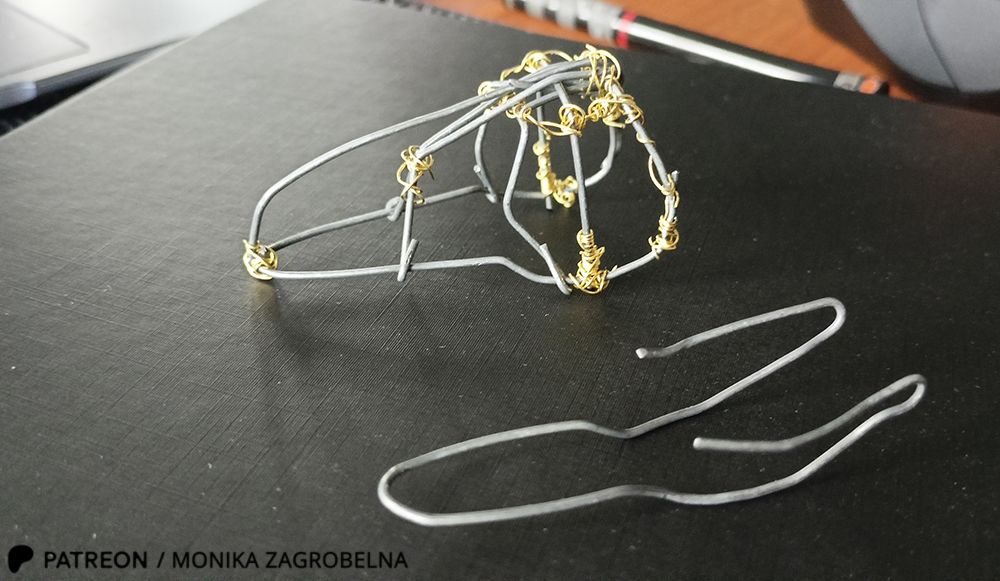
I had to add the scaffolding for the horns as well:
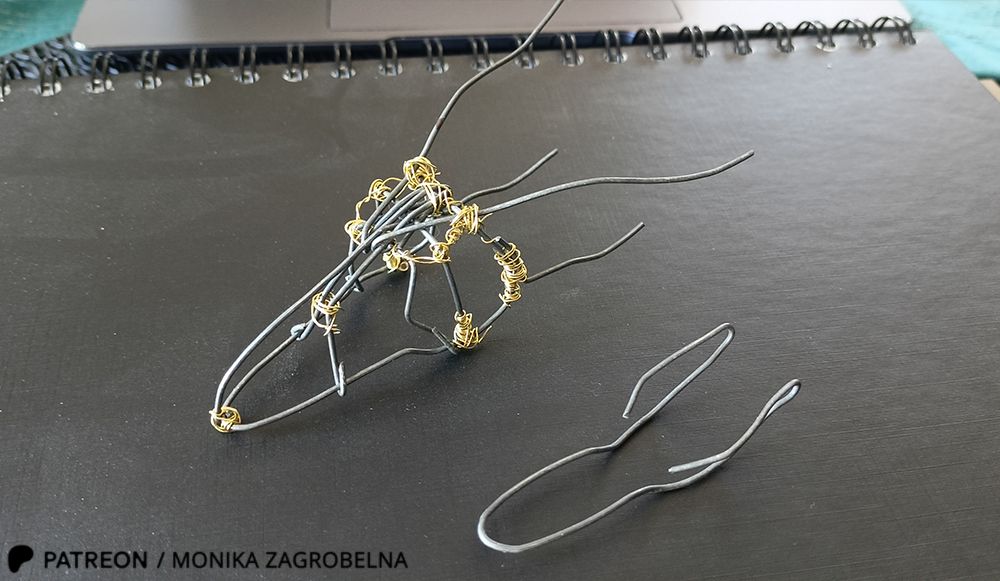
To make the horns sturdier and lighter, and to waste less clay, I filled the horns with aluminum foil.
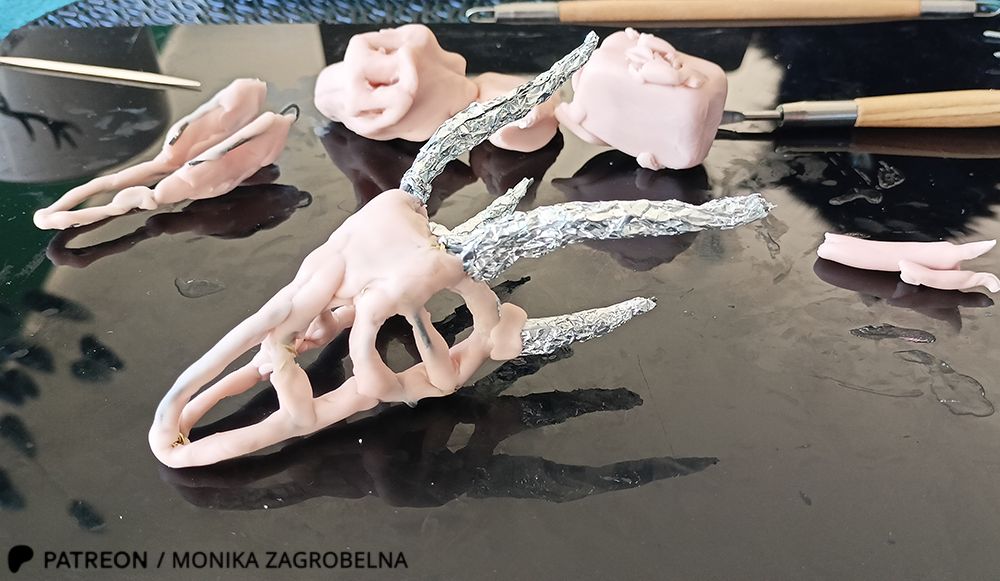
Then I just covered the foil with a thin layer of clay. All the other areas were covered with clay as well, adding volume whenever necessary.
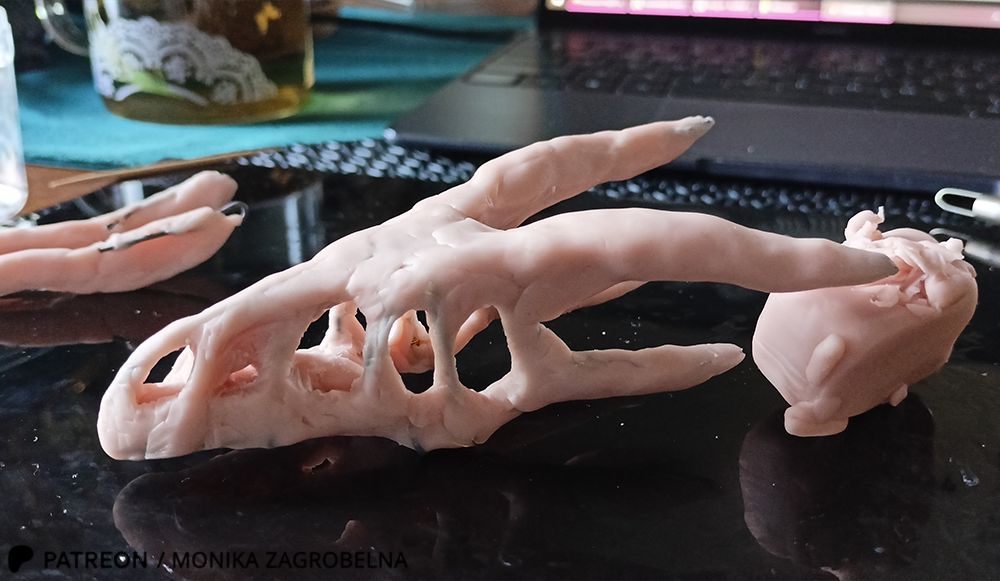
Once I put the basic shapes in place, I start cleaning everything up and adding the details—like teeth and eyebrow ridges. Despite being based on allosaurus, Drogon’s skull also has bony projections inside the eye socket and the temporal fenestra—which is more characteristic to dinosaurs like T-Rex.
Apparently, dinosaurs like allosaurus used slashing bites as their primary attack. So you can imagine two dragons fighting in the air in a bite-retreat cycle—because if you hold on for too long, you can’t really fly. T-Rex, on the other hand, had huge jaw muscles designed for breaking bones—that would give our dragon more of an advantage in ground combat. It could also drag the opponent down after landing one successful bite (as long as it’s quick enough to survive the storm of slashing bites).
Did Drogon’s designers actually think about this stuff? I have no idea, but it seems like some useful information if you’re into world-building.
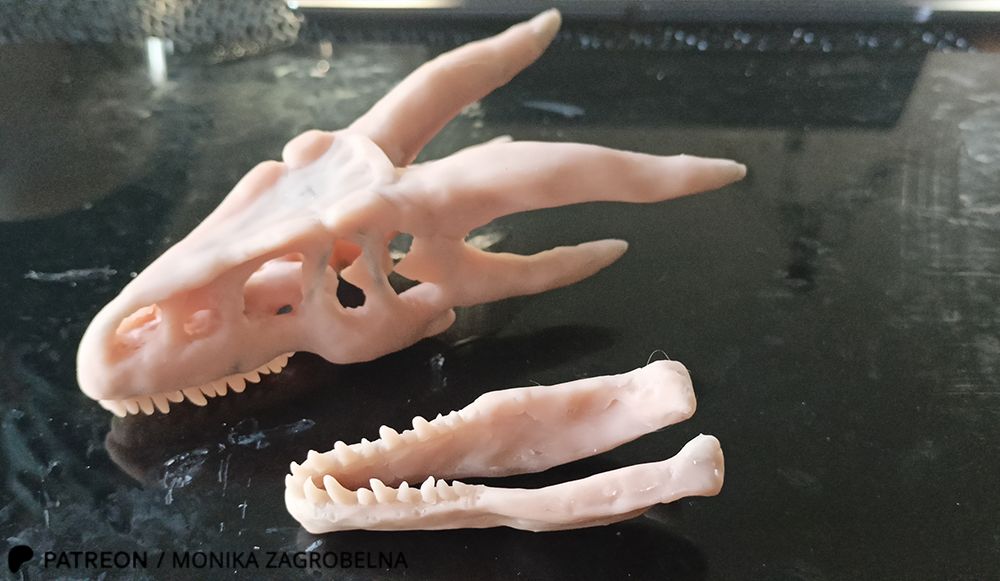
Here’s the full skull after baking. I had to spend some time fixing the jaw hinge, because I didn’t actually do it the proper way—and my simplified version didn’t work at all.
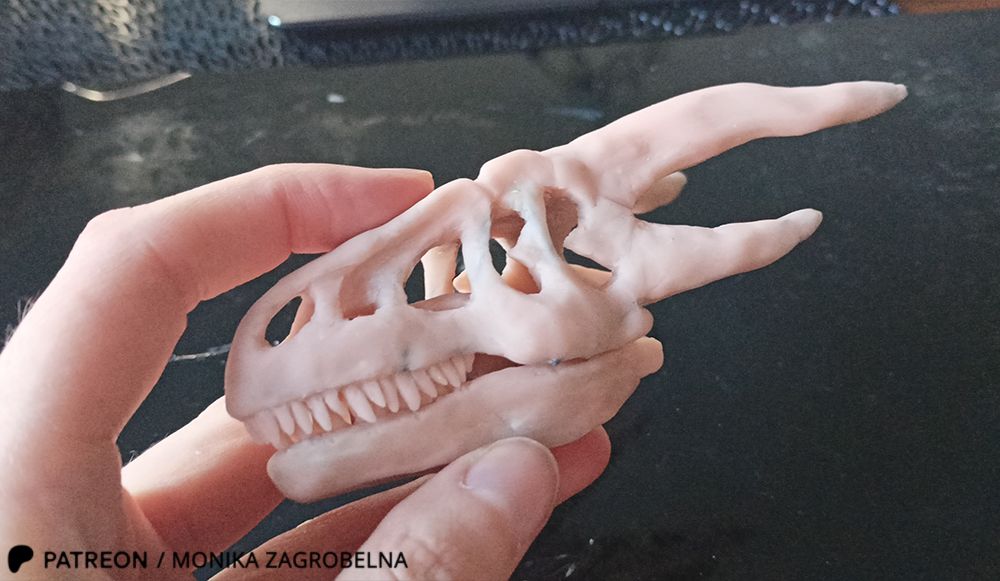
Since the skull was hardened after baking, I could now start adding the surface details without worrying about ruining anything. The plan was to add details on one side only, to keep the skull as a reference as well. So, here’s the eye with its eyelids:
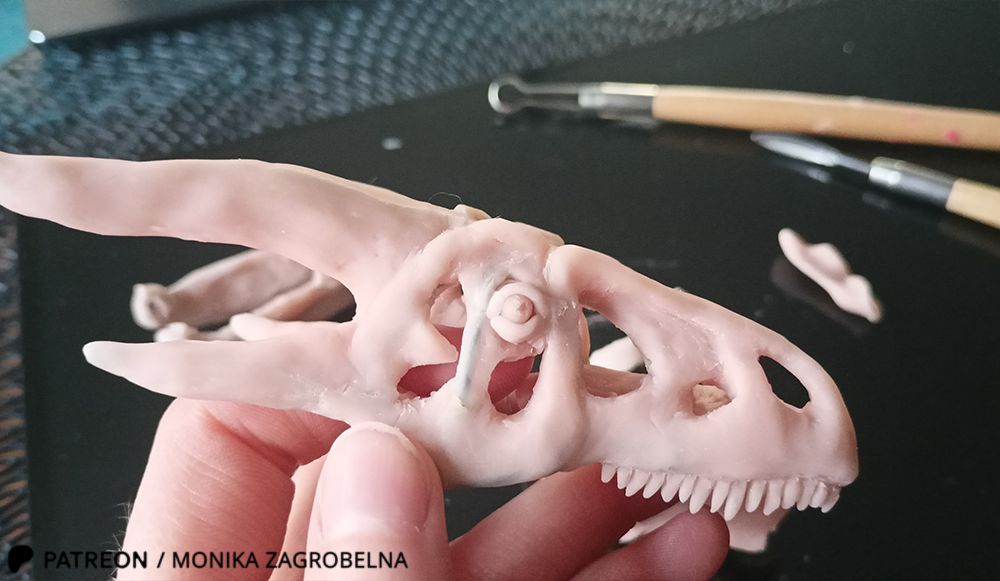
And all the folds around the eye:
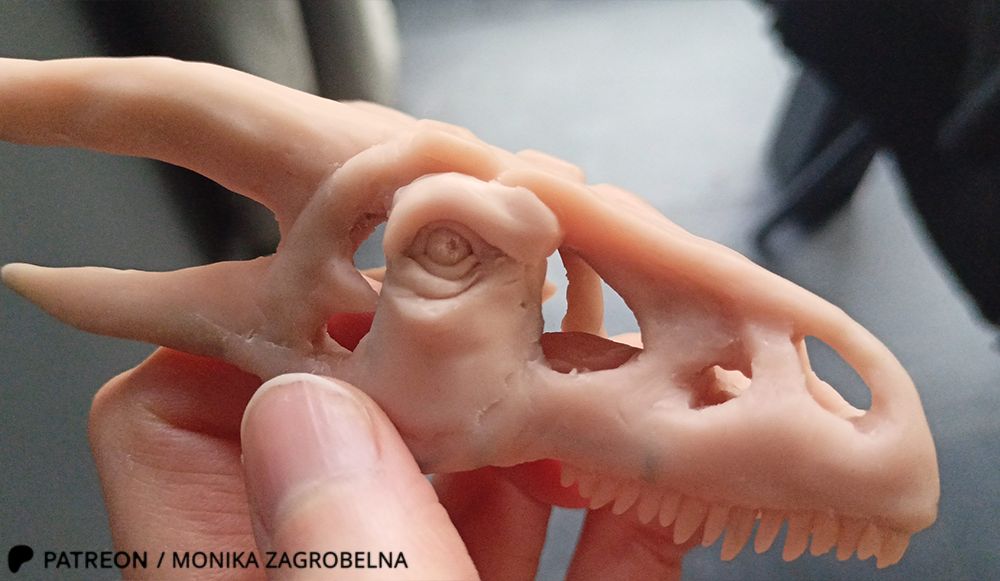
Then it was time to cover all the holes. If it weren’t for the horns, that would be a nice dino head at this point!
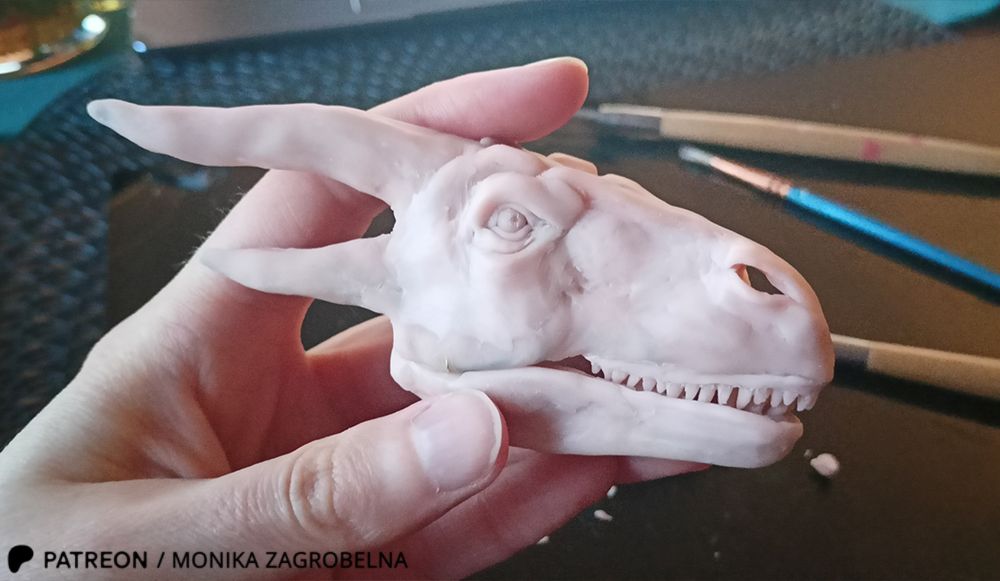
And the rest was just a long series of putting one tiny spike of clay after another, until I achieved a proper Drogon look.
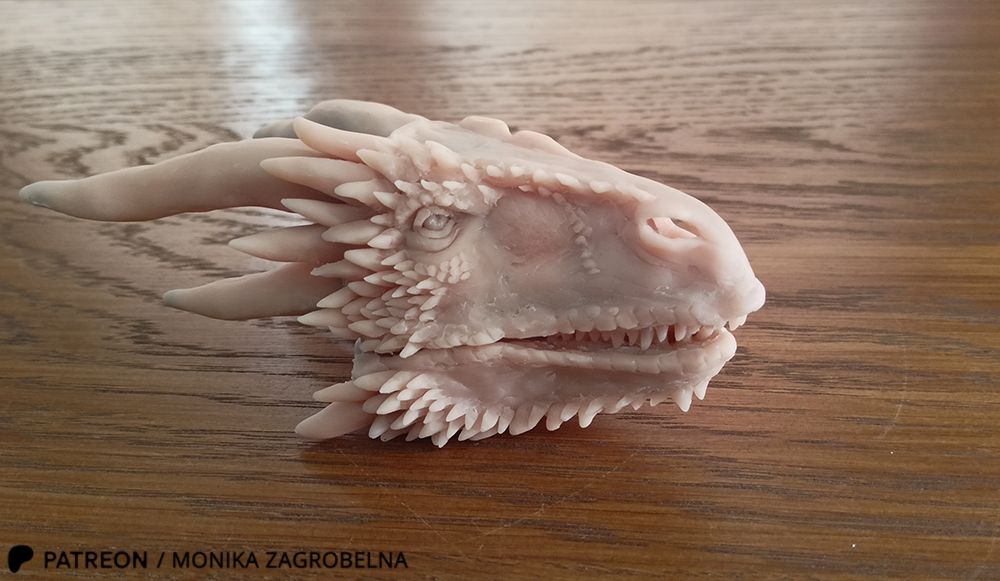
And the rest of the skull is still visible on the other side! You can still see some wire and aluminum foil shining through, but it’s fine—it still turned out better than expected, considering I haven’t sculpted anything for years.
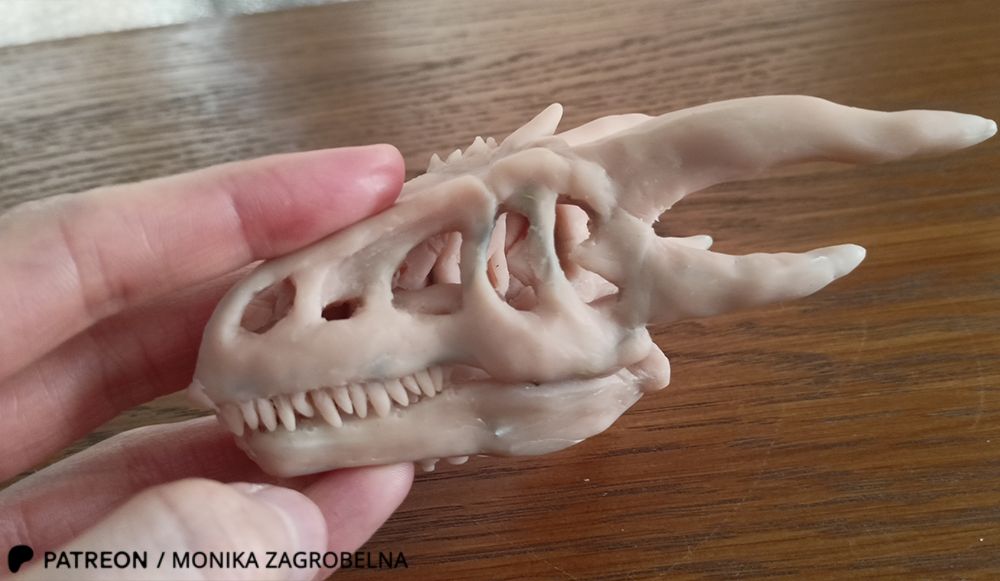
And the jaws are working, too!
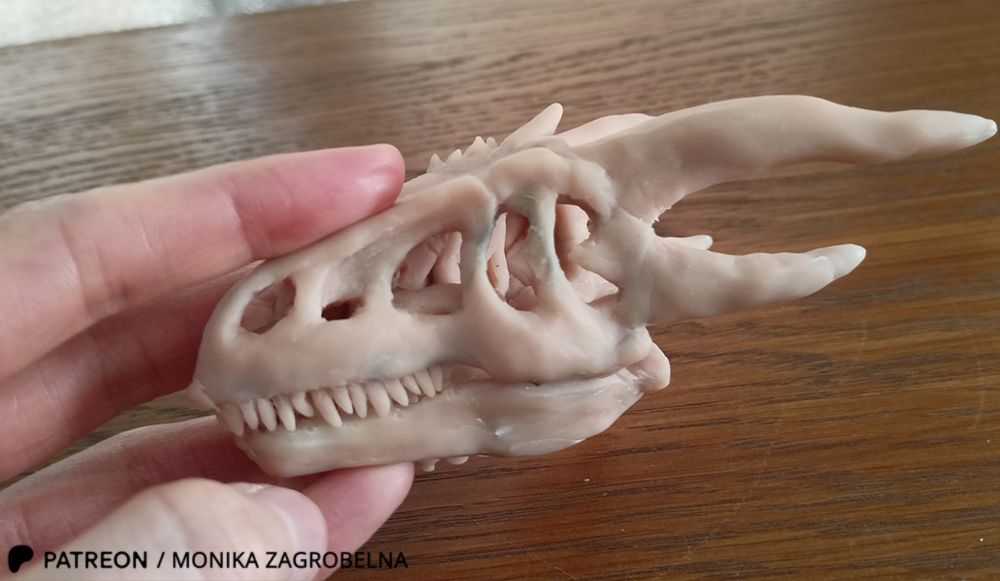
Check out my recent post on Patreon to find the video, if you want to see the details—it’s free!


0 Comments